Professional-Grade Pool Shock. Zero CYA Buildup.
65% calcium hypochlorite granular shock that kills algae, restores clarity, and prevents chlorine lock. Trusted by 1,200+ pool owners.
Check PriceOur Pool Shock Products
65% calcium hypochlorite granular shock in bulk pails and pre-measured bags. Choose the size that fits your pool.
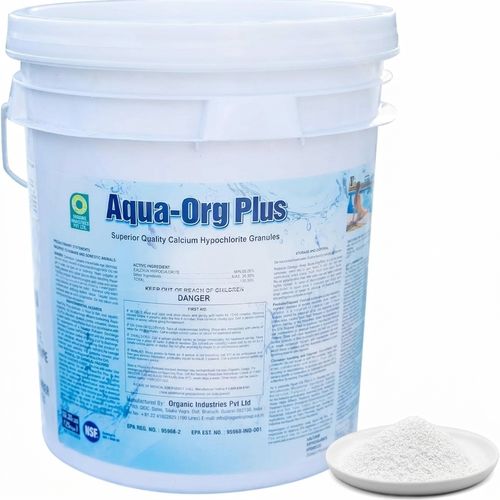
Cal Hypo Pool Shock, 50 lb Pail
- 65% granular cal hypo, 50-pound pail
- Treats in-ground, above-ground, spas, hot tubs
- Non-stabilized formula, no CYA buildup
- Works with liners, gunite, saltwater systems
- 1 lb per 10,000 gallons dosage
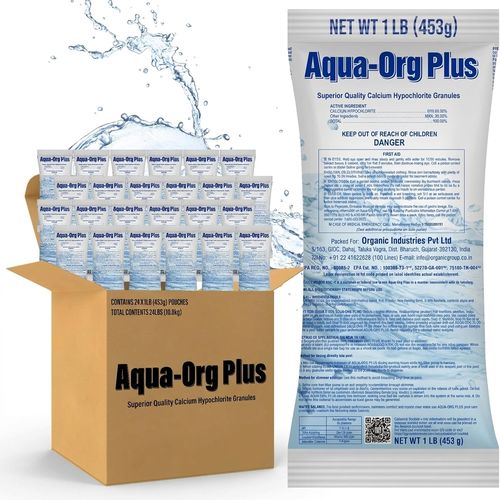
65% Cal Hypo Shock, 24 x 1 lb Bags
- 24 individually bagged 1-pound doses
- 65% granular calcium hypochlorite formula
- Non-stabilized formula prevents chlorine lock
- Works in saltwater, gunite, and liner pools
- Fast-acting algae and clarity treatment
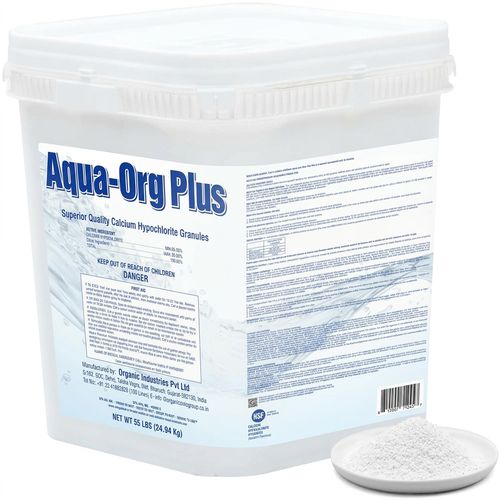
65% Cal Hypo Pool Shock, 50 lb Pail
- 65% granular cal hypo, 50 lb pail
- Non-stabilized formula prevents chlorine lock
- Works in gunite, liner, saltwater pools
- Treats in-ground, above-ground pools, spas, hot tubs
- One pound treats 10,000 gallons
Why Pool Owners Choose Aqua Org Plus
A non-stabilized cal hypo formula built for real pool problems.
Kills Algae and Bacteria
Destroys green algae, black algae, mustard algae, and bacterial biofilm through rapid oxidation of organic contaminants.
Restores Water Clarity
Eliminates the organic compounds that cause cloudiness and green tint. Crystal-clear pool water within 12 to 24 hours after application.
Prevents Chlorine Lock
Non-stabilized formula contains zero cyanuric acid. Your CYA levels stay where you set them, so your chlorine keeps working.
All Pool Types Compatible
Works with vinyl-lined, gunite, fiberglass, and saltwater pool systems. In-ground, above-ground, spas, and hot tubs.
Breaks Down Chloramines
Achieves breakpoint chlorination to destroy combined chlorine. Removes the harsh "pool smell" caused by chloramine buildup.
Bulk Savings of 40-60%
A 50-pound pail costs far less per pound than individually packaged 1-pound shock bags from national brands. One pail covers an entire season.
How to Shock Your Pool
Four steps. Fifteen minutes of active work. Clear water by morning.
Measure
Use 1 pound per 10,000 gallons of pool water. Run the filter pump.
Broadcast
Pour granules directly into pool water. Distribute evenly around the perimeter.
Brush
Brush the pool floor and walls to dissolve granules and prevent settling or staining.
Test and Swim
Wait until free chlorine returns to 1-4 ppm. Test with a liquid drop kit before swimming.

About Aqua Org Plus
Aqua Org Plus is manufactured by Organic Industries, a company focused on delivering professional-grade pool sanitation products at accessible price points. The brand was built on a single principle: pool owners deserve effective chemistry without paying a premium for retail packaging.
The 65% calcium hypochlorite formula sits at the intersection of efficacy and value. Strong enough for commercial pool service operators who treat dozens of pools each week, and packaged in formats that residential owners can handle at home.
What Pool Owners Say
Real reviews from verified buyers who use Aqua Org Plus every season.
This is my first go-round buying loose chlorine for shock rather than the bags, which have doubled in price twice since 2020. A hundred pounds ought to keep me going with my little pool for quite some time. The product works great and the price per pound makes individual bags look like highway robbery. I measured out one bag's worth in a measuring cup and marked the line so I can dose from the pail accurately every time.
This shock dissolves quickly and contains no stabilizer, which is exactly what you want to avoid chlorine lock. The pail comes with an inner plastic bag so you get two layers of moisture protection. I learned the hard way last year that leaving a container unsealed in the shed over winter corrodes everything metal nearby. The dual-seal design on this bucket makes storage much safer. Price was excellent and the product works.
We bought the largest bucket when it went on sale in the fall and weighed it at 102 pounds on a scale, so the net weight is honest. The 65% cal hypo brought our pool from chlorine level 3 to over 9 within an hour. Water had that fresh chlorine aroma. For the cost of two bags of national-brand shock, we got enough product to treat our pool for the entire next season. The instructions on the lid are clear and the tabs snap off easily.
For the price it does what it's supposed to. I dissolve the granules in a 5-gallon bucket of water first, stir for a few minutes, then pour that into the pool. Pouring granules directly can sometimes leave residue on the bottom. Pre-dissolving takes an extra step but prevents staining on my vinyl liner. The product sanitizes well and keeps the water clear between treatments.
The individual bags are a lifesaver for someone with one residential pool. No measuring needed, just tear open a bag and pour. I shock my 12,000-gallon pool weekly with one bag and the water stays crystal clear all summer. Compared to the liquid chlorine I used to haul home from the pool store, these bags are lighter, store easier, and have a longer shelf life.
Good chlorine content at a competitive price point. The granules are heavier than powder, so expect some settling if you broadcast directly. I pre-dissolve in a bucket and pour the mix in. The calcium content raised my hardness levels, which was actually beneficial here in Phoenix where our fill water runs soft. For hard-water areas, monitor your calcium hardness and adjust accordingly.
How Aqua Org Plus Compares
Cal hypo vs trichlor vs liquid chlorine, side by side.
| Feature | Aqua Org Plus | Trichlor Tabs | Liquid Chlorine |
|---|---|---|---|
| Active Chlorine | 65% Cal Hypo | 90% (with CYA) | 10-12.5% |
| Adds CYA (Stabilizer) | ✕ No CYA | ✓ Yes | ✕ No CYA |
| Chlorine Lock Risk | None | High over time | None |
| Shelf Life | Years (dry) | Years (dry) | Months |
| Bulk Cost per Pound | Low | Medium | Varies |
| Pre-Measured Bags | ✓ | ✕ | ✕ |
| Pool Type Compatibility | All types | All types | All types |
| Storage Convenience | Compact pail | Compact bucket | Heavy jugs |
Who Aqua Org Plus Is For
Built for anyone responsible for keeping a body of water safe and clear.
Residential Pool Owners
One pail or a 24-pack of bags covers your backyard pool for the entire season at a fraction of retail cost.
Pool Service Professionals
Bulk 50-pound pails keep per-treatment costs low when you manage dozens of pools each week.
Hot Tub and Spa Owners
The same 65% formula works in smaller volumes. Granular shock gives you precise control over chlorine levels in spas.
First-Time Pool Owners
Pre-measured 1-pound bags remove the guesswork. One bag per 10,000 gallons. Straightforward dosing for beginners.
Expert Pick

"For homeowners battling recurring algae or rising CYA, switching from stabilized tabs to a non-stabilized cal hypo like Aqua Org Plus is the single most impactful change you can make. Shock at dusk, brush the walls, and test in the morning. The water will tell you the difference."
Derek Larson
CPO-Certified Pool Maintenance Specialist, 14 Years
Frequently Asked Questions
Answers to common questions about calcium hypochlorite pool shock.
Cal hypo is the most widely used granular pool shock for good reason. It delivers 65% available chlorine, dissolves in water, and contains zero stabilizer. For routine maintenance and algae treatment, cal hypo gives you strong oxidation without the CYA buildup that trichlor creates over time.
The standard dosage is 1 pound of Aqua Org Plus per 10,000 gallons of pool water for routine shocking. For severe algae blooms or very low chlorine readings, double or triple the dose. Always test free chlorine after treatment and wait until it drops to 1-4 ppm before swimming.
Cal hypo (calcium hypochlorite) is unstabilized and adds no cyanuric acid to your water. Trichlor (trichloroisocyanuric acid) contains built-in stabilizer, which raises CYA every time you add it. High CYA levels reduce chlorine effectiveness, a condition called chlorine lock. Cal hypo avoids that problem entirely.
Yes. Aqua Org Plus cal hypo works with saltwater systems. Saltwater generators produce chlorine continuously, but they cannot handle algae blooms or sudden contamination alone. Cal hypo shock provides the burst of chlorine needed to regain control, then the salt cell resumes daily sanitization.
No. Calcium hypochlorite is non-stabilized and adds zero CYA to your pool water. If your CYA levels are already high from using stabilized products, switching to cal hypo for shocking allows those levels to gradually decrease through dilution and splash-out rather than continuing to climb.
Wait until free chlorine drops to 1-4 ppm. This typically takes 8-24 hours depending on pool volume, sunlight exposure, and initial dosage. Test with a reliable liquid drop kit rather than test strips for an accurate reading. Swimming above 4 ppm can cause skin and eye irritation.
Two common causes: underdosing or high CYA levels. If your CYA is above 60-80 ppm, even strong shock may not overcome the stabilizer's grip on free chlorine. Test CYA separately. If levels are too high, a partial drain and refill is the only way to bring CYA down. Then re-shock with cal hypo.
Each has trade-offs. Granular cal hypo at 65% concentration delivers far more chlorine per pound than liquid chlorine at 10-12.5%. Granular stores for years in dry conditions; liquid degrades in months. Liquid requires no dissolution step and leaves no calcium residue. Many pool owners use both: cal hypo for weekly shock, liquid for daily sanitizer adjustments.
Keep the pail sealed in a cool, dry, well-ventilated area away from direct sunlight. Never store above 125 degrees Fahrenheit. Keep it separated from other pool chemicals, especially trichlor, acids, and organic materials. The Aqua Org Plus pail includes an inner plastic bag liner for double-sealed moisture protection.
Non-stabilized means the product contains no cyanuric acid. CYA acts as a sunscreen for chlorine, slowing UV degradation, but it accumulates and never leaves the water naturally. Non-stabilized shock like Aqua Org Plus lets you control your CYA level independently by adding stabilizer only when you choose to.
Yes, broadcast the granules directly into the water with the pump running. Distribute evenly and brush the floor to prevent settling. Some pool owners with vinyl liners prefer pre-dissolving granules in a 5-gallon bucket of water first to prevent any chance of surface staining. Both methods work.
Once per week during swimming season keeps chlorine levels stable and prevents algae from gaining a foothold. Shock after heavy use, rainstorms, or any visible change in water clarity. Seasonal pools benefit from a strong opening shock in spring and a closing shock before winterization.
CYA accumulates from stabilized chlorine products like trichlor tablets. The only way to reduce CYA once it climbs above 60-80 ppm is a partial drain and refill. Switching your shock treatments to non-stabilized cal hypo like Aqua Org Plus stops the buildup at the source while you use stabilized tabs for daily chlorine.
Never mix different chlorine products together in dry form or in the same container. Cal hypo and trichlor can react violently when combined directly. In the pool water itself, using different chlorine sources at different times is standard practice, but always add them separately with the pump running.
High CYA levels are the most common culprit. When CYA exceeds 60-80 ppm, chlorine gets "locked" and cannot sanitize effectively no matter how much you add. Test your CYA with a reliable kit. If it reads high, perform a partial drain-and-refill before adding more shock.
Cloudiness often comes from suspended debris, dead algae, or imbalanced pH. Vacuum the pool and clean the filter first. Then shock with Aqua Org Plus to oxidize remaining organic matter. Adding shock to a dirty pool without physical cleanup can make cloudiness temporarily worse.
If you need to raise chlorine levels quickly with zero residue, liquid chlorine works well. If you want the highest concentration per pound, long shelf life, and easy storage, granular cal hypo wins. Many experienced pool owners keep both on hand and use them for different situations.
A professional-grade liquid drop test kit (Taylor K-2006 or equivalent) gives the most accurate readings for free chlorine, combined chlorine, pH, alkalinity, and CYA. Basic test strips can be inconsistent and hard to read, especially for CYA measurements where precision matters most.
Yes, liquid chlorine degrades significantly within a few months, especially in heat or sunlight. Buy only what you plan to use soon. Granular cal hypo has an advantage here. Stored sealed in a cool, dry place, it maintains its 65% concentration for years.
Individual wrapping protects each dose from moisture during storage and transport. You get pre-measured doses that eliminate guesswork. Each 1-pound bag treats exactly 10,000 gallons. The packaging also prevents the granules from clumping or losing potency between uses over a long season.
Latest from Our Blog
Guides, tips, and seasonal pool care advice.
March 18, 2026
Cal Hypo vs Trichlor vs Liquid Chlorine: Which Pool Shock Fits Your Pool?
A side-by-side breakdown of three common shock types, their CYA impact, and when to use each one.
Read More →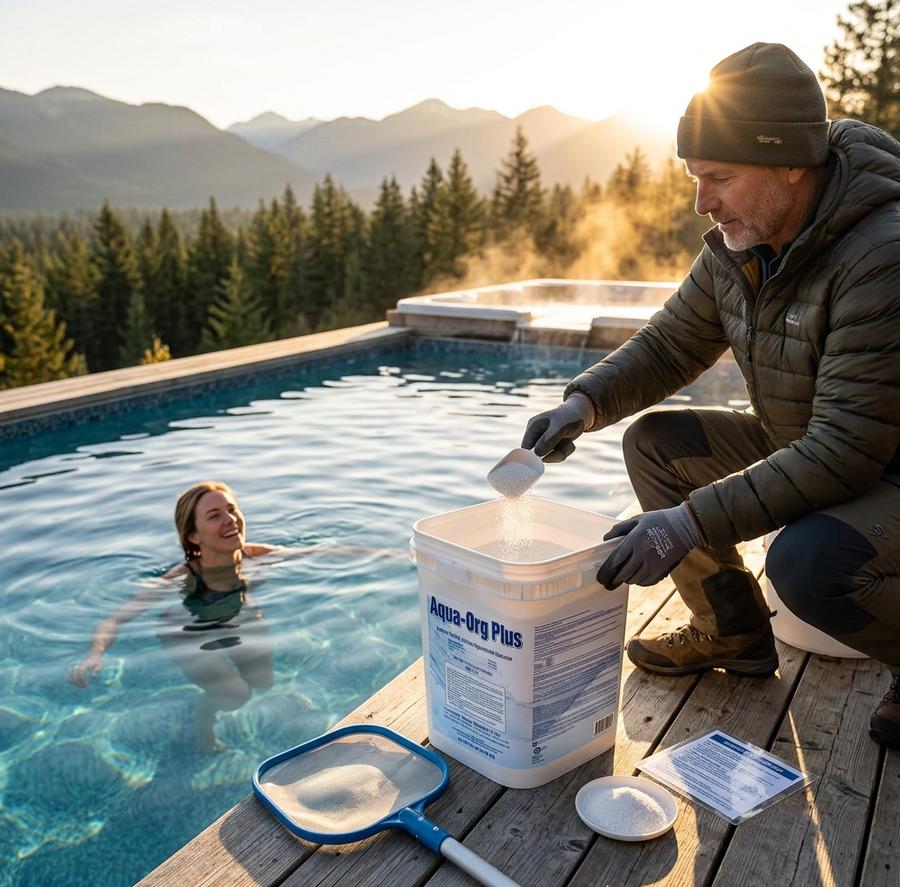
February 24, 2026
How to Shock a Pool With Granular Calcium Hypochlorite Step by Step
Dosage calculations, pre-dissolving tips, and timing advice for the clearest results.
Read More →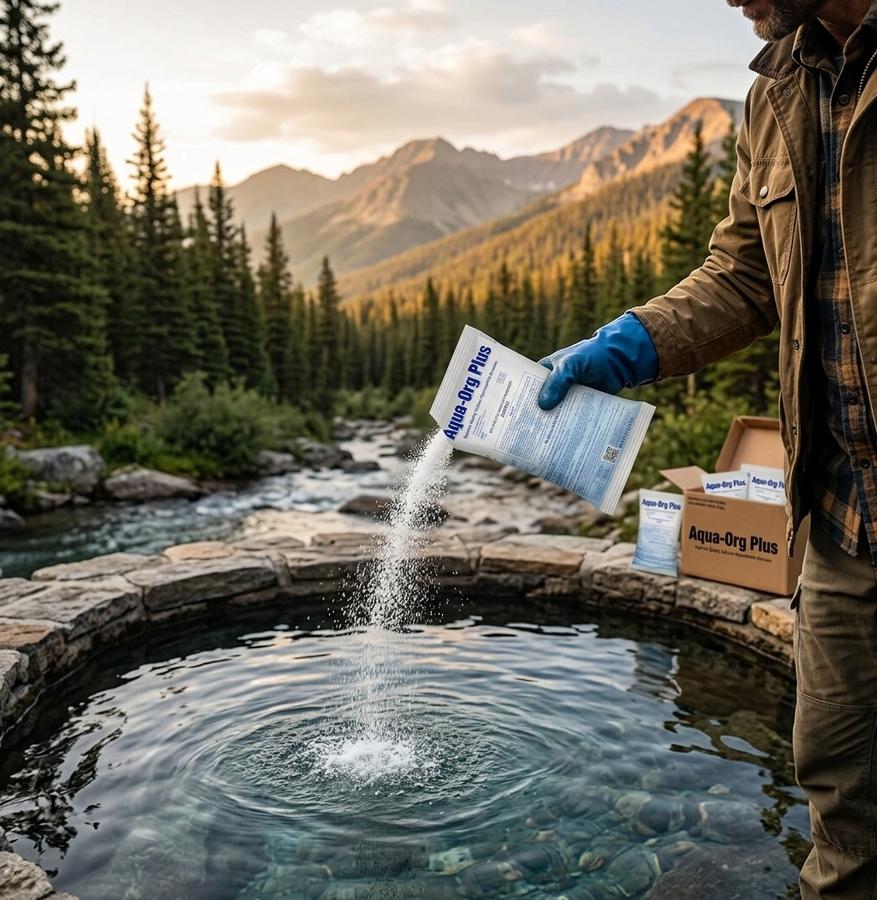
January 30, 2026
Non-Stabilized Pool Shock: Why Zero CYA Matters for Long-Term Water Balance
Your CYA level silently controls chlorine effectiveness. Here is what pool owners often learn too late.
Read More →Product Gallery
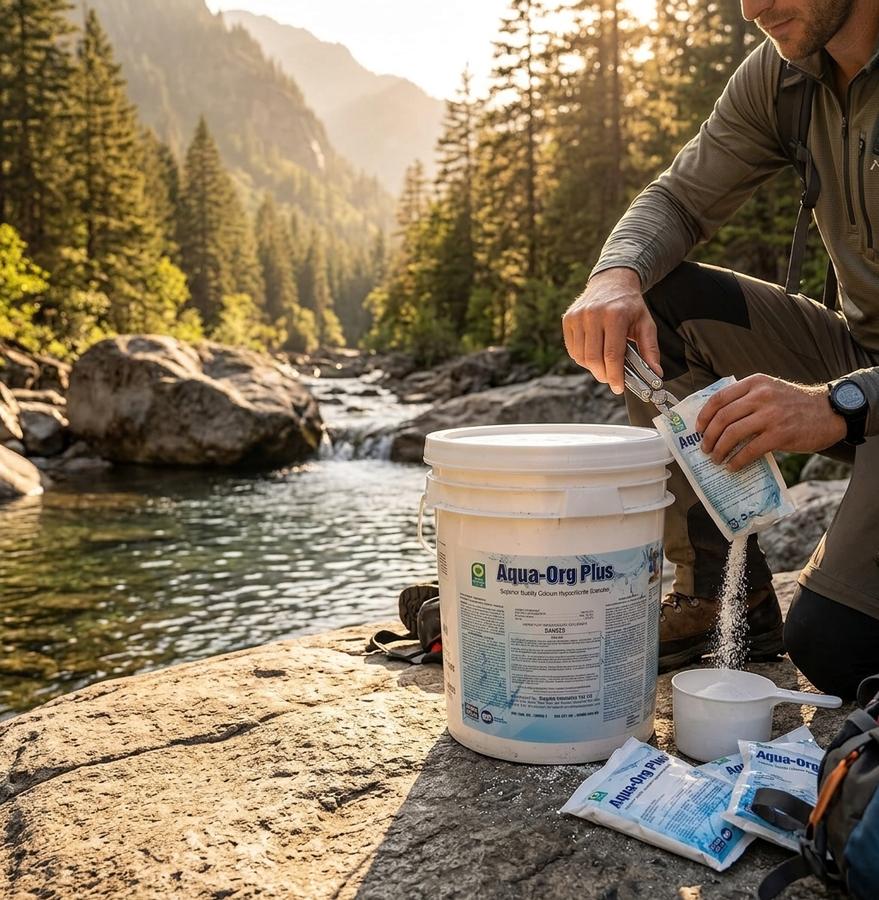
Aqua Org Plus pool shock in real-world settings.


